
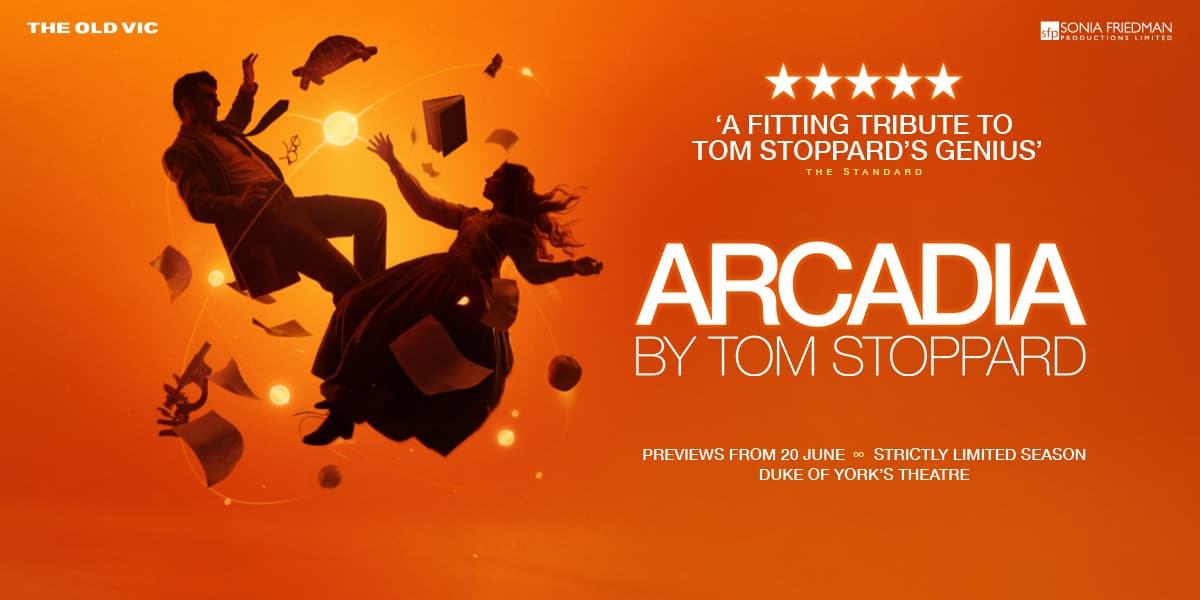
Lyn Gardner Speaks With Carrie Cracknell as Arcadia Transfers to the West End
Published on 18 June 2026
The tiny Gate Theatre, for many years situated above a pub in Notting Hill, has an illustrious alumni of artistic directors. It was where Stephen Daldry got noticed before taking on the Royal Court, where David Farr (who wrote the Night Manager) was AD in the mid-nineties, and in the early 2000s you would have found Erica Whyman, who went on to lead the RSC.
One of the theatre’s most intriguing periods took place between 2007-12 when the theatre was run by two young women, Natalie Abrahami and Carrie Cracknell, whose playful, eclectic programming embraced everything from classic drama to movement- and dance-based work. Every time you stepped through the door of the theatre, you were surprised. Frequently delighted too.
“The Gate was the place where I learnt to trust my own taste and build a relationship between what we were making and the audience,” recalls Carrie Cracknell, who has gone on to make a successful career as an associate and freelance director. Cracknell’s in-the-round revival of Tom Stoppard’s thrilling firecracker of a play about chaos theory, gardening and affairs of the heart, Arcadia, is transferring from the Old Vic to the Duke of York’s this month. It is the same theatre which hosted Cracknell’s game-changing version of A Doll’s House with Hattie Morahan.
When you run a theatre, you can pick and choose the plays you direct, but it is a harder path to navigate artistic ambition as a freelancer, but one that Cracknell has steered well over a career which has included a mesmerising The Deep Blue Sea with Helen McCrory at the National, where she also staged Polly Stenham’s Julie and, most recently, The Grapes of Wrath.
“The question I have to ask myself each time is, 'Does it excite me and is there room for authorship?'" says Cracknell, who says that one of the things she now understands is that to sustain a career as a freelance director, “you have to develop your own projects and material” or you are at the whim of others, particularly when there are leadership changes at different theatres. She’s not discounting the fact that she might run another theatre of her own in the future. After all, Dominic Cooke is back in the game 13 years after he left the Royal Court, taking over the Almeida from Rupert Goold, who is moving to the Old Vic.
But for the time being she is revelling in returning to Arcadia, the first major revival of Tom Stoppard’s masterpiece since the playwright’s death in November last year. Stoppard was a supporter of Cracknell and Abrahami when they were at the Gate, turning up to see work, and she was able to have some conversations with him about Arcadia before he died.
“They were gentle conversations, never instructive, as if he were teasing out my way of thinking about the play. I think he was very keen that we would reimagine Arcadia in our own way.”
She and designer Alex Eales have certainly done just that with an in-the round configuration which gives Stoppard’s most heart-breaking play a more intimate relationship with the audience.
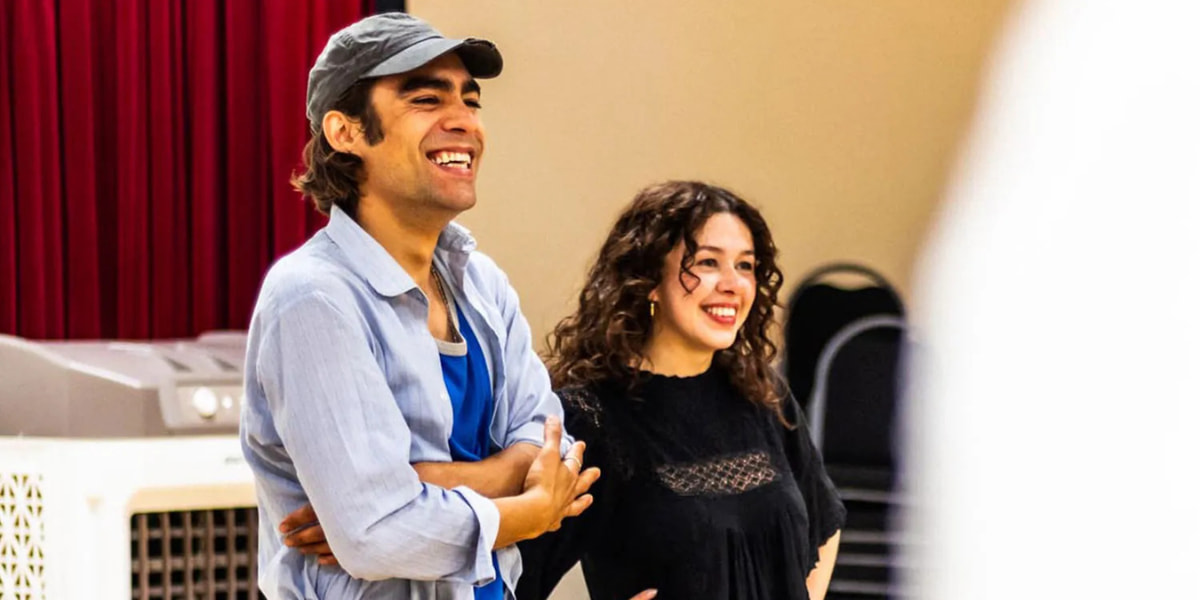
It’s a mature piece of work from Stoppard—arguably his greatest play—but also from a director who knows how to get out of the way.
“As I’ve gotten older", says Cracknell, “I’ve gotten calmer about the fact that with some productions the directorial perspective is the most important thing and in others the job is about setting up a situation where the play can really live and breathe. With Arcadia it’s not about needing to put your stamp on the play, it is about listening to the play and listening hard.”
Cracknell says that directing the transfer “feels a bit like getting into a car you have already driven, so you already know where the keys go and how the gears feel, so there is an opportunity to be playful and have some fun.”
She dismisses the idea that Stoppard’s plays are more head than heart. “Arcadia is an intellectual puzzle, but it is primarily a play of the heart and how we connect with each other.”
She says it’s a play which has never been more resonant than it is now.
“It is a hymn to human curiosity and the urge to investigate and discover things about ourselves and the world. We live at a time when literacy is being lost and learning and understanding devalued, so it feels important to restate those things. I find it incredible watching the scenes set in 1993, when there was so little technology and no phones, and seeing how deeply invested in conversation and inquiry the characters are.”
She remains touchingly passionate about theatre’s unique ability to bring us together and allow us to connect while sitting together in the dark.
“We have such a deep human need to be part of a community. I think the appetite for that is getting stronger. I’ve watched so many younger people loving turning their phones off and finding themselves sitting concentrating and dealing with complexity. There is a pleasure in that, and my instinct is that will only increase over time."
Arcadia plays at the Duke of York's Theatre from Sat 20 Jun - Sat 12 Sep 2026, Book your tickets today.
By Lyn Gardner
Lyn Gardner is an acclaimed theatre journalist and former critic with decades of experience covering British theatre, from off-West End and fringe theatre to major West End productions.